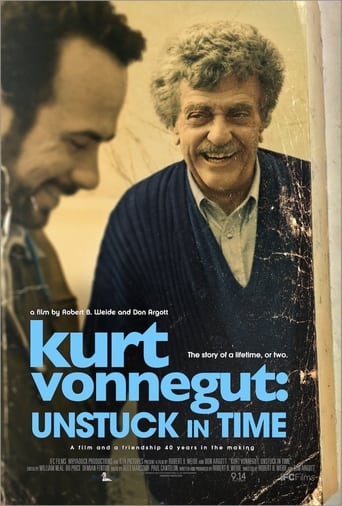
Kurt Vonnegut: Unstuck in Time (2021)

Picked by Unsanctioned Nov 7, 2026
2h 7m Documentary

Based on the life of author Kurt Vonnegut and director Robert Weide's decades-long friendship with him

A documentary 33 years in the making. A director and friend of Kurt Vonnegut seeks through his archives to create the first film featuring the revolutionary late writer.

Behind the scenes

Most famous fact

Filmmaker Robert Weide wrote a fan letter to Kurt Vonnegut in 1982, when he was 23, proposing a documentary. Vonnegut said yes, and the film took about 40 years to finish, ending up as a portrait of both the author and their friendship.

  1. A 40-year documentary that wouldn't get finishedProduction

    Weide wrote to Vonnegut in 1982 and began filming in 1988, intending a conventional author documentary. He got closer to Vonnegut over the years, and the film became harder to finish. He kept filming on and off until Vonnegut died in 2007. Reviewers note that the long gap shows in Vonnegut's changing appearance and voice. The Kickstarter in 2015 finally paid for full-time work, and the film was completed about six years later. Weide ended up putting his own struggle to finish it into the film.

  • Weide launched a Kickstarter in February 2015 with a $250,000 goal. It closed in March 2015 with $300,319 from 3,755 backers.

  • As Kickstarter rewards, Weide offered Vonnegut-related items from his own closet and attic. Four Kickstarter contributors were credited as co-executive producers.

  • The campaign launched on a date chosen to match two Vonnegut anniversaries: 65 years since his first short story, "Report on the Barnhouse Effect", and 70 years since the bombing of Dresden.

  • Weide brought in co-director Don Argott, a documentarian and Vonnegut fan, to handle the "meta" thread about Weide and the making of the film. That let Weide focus on Vonnegut instead of interviewing and following himself around.

  • Weide said he didn't decide to fold his own story into the film until after Vonnegut's death in 2007. He was reluctant to appear on camera, and other people persuaded him it belonged in the film.

  • The film's jumbled, non-chronological structure is modeled on Vonnegut's writing. The title comes from the opening of Slaughterhouse-Five, and the structure also echoes the fragmented, self-referential Timequake.

  • Weide discovered Vonnegut in high school, when his English teacher assigned Breakfast of Champions.

  • Sources date the project differently. Weide wrote his letter in 1982 and first made contact around 1982–83. Filming began in 1988, and he filmed on and off until Vonnegut died in 2007. This is why coverage calls it 33, 39 or about 40 years in the making.

  • Weide had already written and produced the 1996 film adaptation of Vonnegut's Mother Night. He also became a key director and producer on Curb Your Enthusiasm while this documentary sat unfinished.

  • It premiered at DOC NYC on November 11, 2021, which Weide pointed out was Vonnegut's 99th birthday. It opened in limited release on November 19, 2021 and grossed about $60,000 in the US.

  • Jesse Jesse Nov 7, 2026

    Great documentary that heaps praise on one of America's greatest writers without pulling the few punches that deserved to land. It's a great portrait of his life; Kurt Vonnegut beat back his insanely traumatic youth with only a sense of humor, a pack of Pall Mall's, and a typewriter. Really inspiring stuff.

    Read it on Letterboxd
The Worst Witch (1986)

Picked by Beff Nov 5, 2026
1h 10m TV Movie, Family, Comedy
Directed by Robert Young

Based on Jill Murphy's 1974 children's novel, the first in her Worst Witch seriesThe first Worst Witch film

Mildred is one of the young girls at a prestigious witch academy. She can't seem to do anything right and is picked on by classmates and teachers. The headmistress of the school, Miss Cackle, has an evil twin sister who plans to destroy the school. Can Mildred foil the plan before the Grand Wizard comes to the Academy for a Halloween celebration you'll never forget?!!

Behind the scenes

Most famous fact

Tim Curry plays the Grand Wizard, a rock-star-style visitor who sings the synth-heavy "Anything Can Happen on Halloween". The film aired on HBO and the Disney Channel every October into the late 1990s, which made it a cult Halloween favourite and a school-of-witches story that predates Harry Potter.

  1. The author wasn't a fanControversy

    A fan wiki trivia entry quotes Jill Murphy as saying the film was a disappointment. She blamed the script and mistakes such as the costumes, and said the girls nearly cried when they saw how ridiculous the hats looked. I couldn't re-check the original interview, so treat the wording as secondhand.

  • It was shot at St. Michael's College in Tenbury Wells, England. The broomstick-practice scenes outdoors were reportedly filmed in the cloisters, and much of the interior was used too.

  • The Grand Wizard is the only male character in the film. In the books he is an old, white-bearded Dumbledore-type, but here he is Tim Curry, and the students swoon over his picture like he's a movie star.

  • Charlotte Rae plays both the kindly headmistress Miss Cackle and her evil twin Agatha. Agatha is given a pink wig and a Texan accent.

  • The opening and closing song "Growing Up Isn't Easy" is sung by West End star Bonnie Langford. Charles Strouse (Annie) composed it with lyrics by Don Black, and the pair also wrote Curry's "Anything Can Happen on Halloween". Denis King wrote the score and the song "My Little School".

  • British rock band Stonegarth recorded a cover of "Anything Can Happen on Halloween" in 2008.

  • IMDb trivia notes that this was one of several witch roles for Fairuza Balk. She was hunted by a wicked witch in Return to Oz (1985) and later played a witch in The Craft (1996) and The Craft: Legacy (2020).

  • Although it was made by Britain's Central Independent Television for ITV (UK airing 1 November 1986), it was co-produced with HBO. HBO aired it in the US around Halloween 1986, and the Disney Channel later repeated it.

  • The film pads out the book with extra sequences, such as a scaring contest and an opening scene with Charlotte Rae as a punk-styled character, according to TV Tropes. It still follows the book's main events: Mildred's invisibility mishap, Ethel turned into a pig, and a sabotaged broomstick formation for the Grand Wizard.

  • The later TV series (1998 onward, on ITV and the BBC) came after this one-off film, which was the first screen adaptation of Murphy's books.

Avg 3.0

  • Jesse Jesse Nov 5, 2026

    Harry Potter if it were all girls and also an unflinching fever dream.

    Read it on Letterboxd
  • Casey Casey Nov 6, 2026

    Tim Curry showing up in this feels like being slapped out of a light nap.

    Read it on Letterboxd

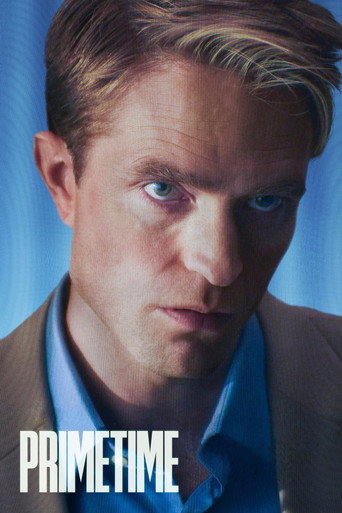
Primetime (2026)

1h 50m Thriller, Drama
Directed by Lance Oppenheim
Written by Ajon Singh

Based on Luke Dittrich's 2007 Esquire article "Tonight on Dateline This Man Will Die", about the botched To Catch a Predator sting

In 2006, To Catch a Predator host Chris Hansen sets out to make television history. When a high stakes operation goes fatally wrong, his veneered dream of fame curdles into a nightmare of performative justice.

Behind the scenes

Most famous fact

Robert Pattinson plays To Catch a Predator host Chris Hansen in a stylised, hallucinatory dramatisation of the show's making and its botched final sting. Hansen himself has publicly slammed the film.

  1. A bribe of 200 Zyn canistersCasting

    Pattinson first signed on as producer and was reluctant to play Hansen. Oppenheim says he and writer Ajon Singh campaigned hard, and that Pattinson was 'grappling with a Zyn addiction' at the time. Oppenheim sent him 200 canisters of Zyn with a letter addressed to 'Dear Chris Han-Zyn', and Pattinson then called to say he was in.

  2. Hansen walks out of the screeningControversy

    In August 2026 Hansen went to A24's offices for a private screening but left without seeing the film. He said he refused to sign an agreement that took away rights to his name, image and brand. A source close to A24 said it was a standard preview-audience NDA. Hansen has since called the film a fictional portrayal and the Esquire piece it's based on 'a hit job'.

  3. Amanda Knox almost played AndieCasting

    At a Directors Guild panel, casting director Francine Maisler said Oppenheim had floated casting Amanda Knox in the producer role before Merritt Wever was cast. Maisler says she shut the idea down immediately. Knox later said she would have done it and 'killed it'.

  4. Jerry Maguire kid goes full-frontalLegend

    Former child star Jonathan Lipnicki plays the predator 'Crazyfrog73' in a scene in which he is caught exposing himself. He said he had 'anxiety' about it but had prayed for dark material. He and Pattinson improvised for nearly ten minutes, and the film used some of it. Lipnicki says he didn't warn his family beforehand.

  • Director Lance Oppenheim has described Pattinson's Hansen as a cross between Jerry Maguire and Dracula. Jonathan Lipnicki, who plays one of the show's caught predators, made his screen debut as a child in Jerry Maguire.

  • The film was shot on 12 different camera formats. Oppenheim gave them 'psychological' roles: DV footage is 'objective', while the Plumbicon camera and digital cinema footage stand for Hansen's id and superego.

  • All the footage, whatever it was shot on, was printed to 16mm film and then digitised for the edit. Oppenheim and cinematographer David Bolen did this because the digital Alexa images looked too crisp. The scan also gave the picture a layer of distance.

  • Shooting ran from February 10 to late March 2025 under the working title 'Bluefin Tuna'. Oppenheim, a Florida native, wanted to shoot in Florida, but Louisiana's tax incentives won out. The production reportedly spent $14.5 million in Louisiana.

  • Merritt Wever's character Andie Bender is a fictional composite of the show's producers. Wever chewed so much Nicorette for the role that she says she went through about a hundred packs of sugar-free gum.

  • Skyler Gisondo plays decoy Dan Schrack, whom he played as a 'musical theater kid'. He worked with a vocal coach to raise his voice, and for the scene where Dan mimics Hansen he copied Pattinson's impression of Hansen rather than Hansen's real voice. He had Pattinson read Dan's lines on set as a model.

  • Composer Ari Balouzian joined early and worked before and during filming. Pattinson listened to his compositions on set to help him get into character.

  • The screenplay is by Ajon Singh, who watched To Catch a Predator with his immigrant mother as a ten-year-old. She made him watch it to stay safe online. Singh has said the script uses the musical Rent as a recurring motif.

  • Drama:Hansen bought pre-show cinema ads for every Primetime screening. They show him in a sting-house kitchen telling the audience to 'take a seat' and directing them to his streaming service TruBlu. He wanted to end them by calling the film a 'Hollywood fantasy version', but was reportedly advised against it to avoid legal trouble with A24.

  • The film opened to $19.2 million domestically, one of A24's biggest opening weekends. Audiences skewed notably Gen Z, according to IndieWire's box-office report.

  • Jesse Jesse Nov 4, 2026

    Robert Pattinson's performance is amazing, unhinged, and he carries the entire movie. He plays this perfectly. If you pluck him out, it's a kind of boring biopic, but he makes it worth the watch.

    Read it on Letterboxd

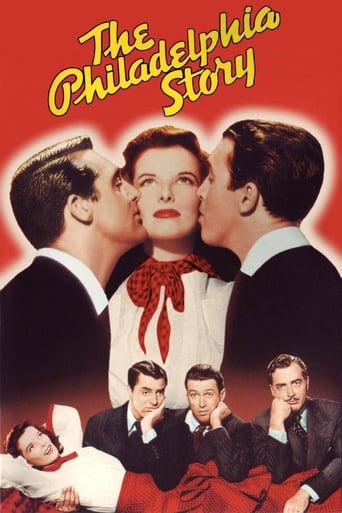
The Philadelphia Story (1940)

Picked by Casey Nov 2, 2026
1h 53m Comedy, Romance
Directed by George Cukor

Based on Philip Barry's 1939 Broadway play, written for Katharine Hepburn of the same name

When a rich woman's ex-husband and a tabloid-type reporter turn up just before her planned remarriage, she begins to learn the truth about herself.

Won 2 Oscars from 6 nominations, Best Picture among them

  • New York Film Critics Circle Award for Best Actress (Katharine Hepburn)

Behind the scenes

Most famous fact

Katharine Hepburn, branded "box office poison" in 1938, starred in the Broadway play, got the film rights bought for her by Howard Hughes, and used them to take control of the film and revive her career. She chose the director, writer and co-stars.

  1. Hepburn's comeback gambleProduction

    After exhibitors listed Hepburn as "box office poison" in 1938, she left Hollywood for Broadway and starred in Barry's new play, which was written for her. Her then-boyfriend Howard Hughes helped her get the film rights. She sold them to MGM's Louis B. Mayer for a reported $250,000, with approval over the producer, director, screenwriter and cast. The film made her a star again.

  2. The stars Hepburn didn't getCasting

    Hepburn first wanted Clark Gable and Spencer Tracy as her leading men, but both were unavailable. Mayer offered James Stewart, whom MGM controlled, plus money to land a bigger name, and that money reportedly helped sign Cary Grant. One source says Tracy turned down Stewart's part because he wanted to make Dr. Jekyll and Mr. Hyde. Hepburn and Tracy finally paired up in Woman of the Year (1942).

  3. The unscripted hiccupLegend

    In the drunk scene, Stewart reportedly came up with the hiccups on the spot and didn't warn Grant. You can see Grant look down, grin and try not to laugh. He says "Excuse me" to cover. According to IMDb, the scene was done in a single take.

  4. Stewart's surprise OscarLegend

    Stewart won Best Actor, his only competitive Oscar. He always said Henry Fonda deserved it for The Grapes of Wrath. He thought his win was "deferred payment" for Mr. Smith Goes to Washington. According to IMDb, he hadn't planned to attend the ceremony and was phoned shortly beforehand and told to put on a dinner jacket and come.

  5. Grant's top billing and war-relief salaryLegend

    Grant insisted on top billing, although Hepburn's Tracy is the lead and Stewart has more dialogue. He then gave his whole salary to British war relief. Sources give different figures for the fee.

  • Tracy Lord was inspired by Helen Hope Montgomery Scott, a Philadelphia Main Line heiress who had married a friend of the playwright Philip Barry.

  • Barry reportedly got the idea during a visit to St. Paul, Minnesota, where he heard about a local racket that blackmailed rich families by threatening to expose their scandals. His wife suggested Philadelphia's Main Line as the setting.

  • Filming ran from about July 5 to August 14, 1940 at MGM's Culver City studios. It took roughly eight weeks, and sources say it needed almost no retakes.

  • Producer Joseph L. Mankiewicz reportedly came up with the idea of merging two of the play's characters into the role that became Cary Grant's Dexter. The idea was to tempt Grant into the part. Waldo Salt did uncredited work on the screenplay alongside Donald Ogden Stewart.

  • Grant was reportedly offered his choice of the two male leads and picked the less showy one. He also demanded top billing, even though Hepburn's character is the protagonist.

  • Grant gave his entire fee to British war relief. Sources disagree on the amount, quoting figures from $100,000 to about $137,500 and $150,000. Hepburn deferred her own salary in return for 45% of the profits.

  • James Stewart reportedly felt uncomfortable with parts of his dialogue, especially the swimming-pool scene, where he plays much of it in a dressing gown. He later joked that showing his swimming trunks might have ended his career.

  • One source credits Hepburn with doing her own dive into the pool, with no stunt double.

  • The film opened in New York on December 26, 1940. One New York theater reportedly sold a then-record 110,168 tickets in its first four days and had the longest lines in its eight-year history.

  • Grant's other 1940 film, His Girl Friday, also has him trying to win back an ex-wife from her fiancé. The Philadelphia Story's face-shove during the opening argument was later echoed in A Fish Called Wanda, whose hero is named Archie Leach after Grant's real name.

  • Jesse Jesse Nov 2, 2026

    It felt like a 90's rom-com mixed with a 90's sitcom. I didn't think that the story was much to write home about, but the cast — especially Jimmy Stewart — delivered some pretty impressive performances. Katharine Hepburn was magnetic. I learned after watching that she had been labeled "box office poison" and this saved her career.

    Read it on Letterboxd

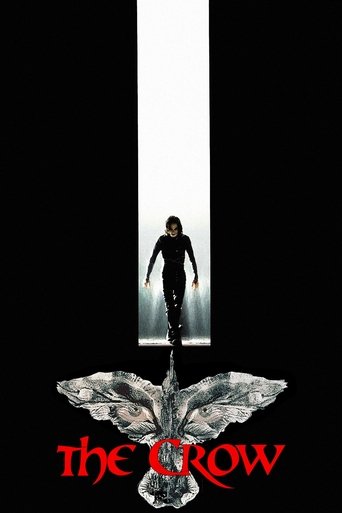
The Crow (1994)

Picked by Unsanctioned Nov 1, 2026
1h 42m Fantasy, Action, Thriller
Directed by Alex Proyas

Based on James O'Barr's 1989 comic book series of the same nameThe first Crow film

Exactly one year after young rock guitarist Eric Draven and his fiancée are brutally killed by a ruthless gang of criminals, Draven, watched over by a hypnotic crow, returns from the grave to exact revenge.

Behind the scenes

Most famous fact

Star Brandon Lee, son of Bruce Lee, was killed on set on March 31, 1993 when a prop gun fired a lodged fragment of a dummy bullet into him. The film was finished with rewrites, a stunt double and digital effects, and it became his final film.

  1. The death of Brandon LeeAccident

    On March 31, 1993, Lee was filming the scene where Eric is shot as he walks into his apartment carrying groceries. Michael Massee fired a prop gun from close range, and a piece of a dummy bullet that had lodged in the barrel earlier struck Lee in the abdomen. The crew first thought he was acting, until he didn't get up and his abdomen began to swell. He died after about six hours of surgery at New Hanover Regional Medical Center, aged 28. A district attorney's investigation brought no criminal charges and the death was ruled an accident. His mother later settled a lawsuit against the production company.

  2. Finishing the film without its starProduction

    Eight days of shooting remained when Lee died, including three days with him. After a pause of several weeks, and with the blessing of his fiancée and mother, Proyas decided to complete the film in Lee's memory. Script rewrites, Stahelski as a double, and digital work by Dream Quest Images put Lee's face on the double in a few scenes. One sequence uses unused footage of Lee for the shattered-mirror shot. The footage of the fatal take was reportedly destroyed, and Snopes says the death is not in the film.

  3. A set plagued by mishapsProduction

    Before Lee's death the production was already reported as accident-prone. A worker was reportedly electrocuted on the first day, another stabbed his hand with a screwdriver, and a crane hit power lines. A fired ex-worker drove a truck through the plaster shop, and a production truck caught fire. A storm destroyed much of the Wilmington sets in March 1993. A production coordinator said at the time that these were not unusual for a shoot of this size.

  4. Paramount walks, Miramax steps inProduction

    After Lee's death Paramount used its right not to take the film. Miramax acquired it in early 1994, with its Dimension label, and released it on May 13, 1994. It opened at number one with nearly $12 million, grossing about $50.7 million in North America and $93.7 million worldwide, and became a cult classic.

  5. The man who pulled the triggerLegend

    Michael Massee, who fired the gun, was never blamed by investigators or the production. He was deeply affected by the accident, and reportedly stopped acting for a year. He said in 2005 that he still had nightmares about it. He reportedly never watched the finished film before his death in 2016.

  • Wikipedia lists the film as set in Detroit, but it was shot mostly in Wilmington, North Carolina. Interiors, including Eric and Shelly's apartment, were built at the studio then known as Carolco Studios (now EUE/Screen Gems), and Los Angeles supplied some exteriors.

  • Per Proyas's Blu-ray commentary (as reported on IMDb), Lee disliked the face paint when the makeup department applied it. They agreed he would put it on himself at night so it looked naturally worn by morning.

  • Lee lost more than 20 lbs for the role, weighing his food on a scale. According to O'Barr he "didn't have much to lose" to begin with.

  • Comic creator James O'Barr was wary of Lee at first. He had only seen him in Showdown in Little Tokyo and feared a straight-to-video kung fu movie. He was won over on set when Lee, in costume, spoke lines straight from the comic.

  • O'Barr was asked to suggest someone for Top Dollar and named Michael Wincott. The producers cast him quickly after an audition.

  • O'Barr appears in a cameo as one of the looters running from the exploding pawn shop. He also reportedly gave away most of his earnings from the film because he saw them as 'blood money' after Lee's death.

  • Lee signed a three-picture deal with producer Edward R. Pressman, to be honored if the first film succeeded. This is why sequels were planned.

  • The Cure wrote 'Burn' specifically for the film. The soundtrack, released March 29, 1994 on Atlantic, reportedly sold 3.8 million copies. It also features Nine Inch Nails' cover of Joy Division's 'Dead Souls', Stone Temple Pilots, and a re-recorded Rage Against the Machine track, 'Darkness'.

  • The crow actor on screen was a trained bird reportedly named 'Magic'. Lee's longtime friend Chad Stahelski, later director of John Wick, was his stunt double and then body double for scenes shot after Lee's death.

  • Eric Mabius, who later starred in The Crow: Salvation, auditioned for the role of Funboy. Michael Berryman's 'Skull Cowboy' scenes were cut, reportedly because the cast and crew thought the character clashed with the film's look. TV Tropes says this was before Lee's death.

Avg 5.0

The Long Kiss Goodnight (1996)

Picked by Jesse Oct 29, 2026
2h 1m Crime, Action, Mystery
Directed by Renny Harlin
Written by Shane Black

Samantha Caine is a small-town schoolteacher and mom with no memory of her life before washing up on a beach eight years ago. After a car accident and a violent home invasion trigger flashes of her past, she discovers she used to be a deadly CIA assassin. Teaming up with a wisecracking private investigator, Samantha must return to her old ways to take down the people who tried to erase her.

Behind the scenes

Most famous fact

Shane Black's script sold for a then-record $4 million, which made him the first writer to sell a spec script for that much. The film then underperformed, and Black stepped away from big studio action movies for years.

  1. The record $4 million script and the backlashControversy

    New Line paid a then-record $4 million for Shane Black's spec script in 1994. Black later said it stirred envy among fellow screenwriters and accusations of commercialism. When the film underperformed, he voluntarily stepped back from big-budget Hollywood work for nearly a decade. He re-emerged as a director with Kiss Kiss Bang Bang.

  2. A part "written as white" and a Christmas partyCasting

    Samuel L. Jackson told GQ he couldn't get an audition because the studio said the character was supposed to be white. He ran into Geena Davis and Renny Harlin at a Christmas party and told Harlin the studio wouldn't let him have the part. Harlin reportedly cast him on the spot.

  3. The hotel that burned downAccident

    One planned location was Windermere House, a roughly century-old grand hotel in Muskoka, Ontario. It caught fire and burned to the ground during the production period in early 1996. The heat from the film lights was blamed at first, but that was never proven. The scenes were reshot in Collingwood and at Milford Manor in Milton, and the hotel has since been rebuilt.

  4. Jackson's character was meant to dieProduction

    Reports say Mitch Henessey was originally written to be killed off. Harlin changed the final cut so that Jackson's character survives.

  • In the first draft, the name "Sam Caine" was not an alias Charly Baltimore had used. It was a name her amnesiac mind had invented, an anagram of "amnesiac".

  • Geena Davis and her then-husband Renny Harlin timed how long she could hold her breath in their bathtub to prepare for the water-torture scene. The three dunkings last 51, 81 and 55 seconds of screen time. Another account says she insisted on doing the scene for real and practiced at home.

  • Craig Bierko suggested using Santana's "She's Not There" in the film.

  • Samuel L. Jackson named Mitch Henessey as his favorite role he has ever played, when he appeared on The Tonight Show Starring Jimmy Fallon in January 2019.

  • A phone booth in the film carries the graffiti "Hell Sinki", a nod to Harlin's native Helsinki, Finland. It is one of his recurring trademark touches.

  • The film's German title translates to "Deadly Christmas" (Tödliche Weihnachten). It's a Christmas movie by setting, and fans have long argued that it belongs alongside Die Hard and Lethal Weapon in the holiday action canon.

  • The ice-skating action sequence was shot in sub-zero temperatures using an aerial rig, then completed with green-screen shots in a studio.

  • The Variety trade item from 1995 shows the film was held up while Davis and Harlin finished Carolco's Cutthroat Island. Black used the delay to improve the script. Cutthroat Island flopped, and the pair then made this film together.

  • In 2007 Samuel L. Jackson told MTV that he and Harlin were working toward a sequel. It was said to centre on the daughter of Davis's character, who would seek out Mitch's help. It was never made.

  • Harlin has called this his favorite of all the films he has made. Arrow Video released a restored 4K UHD edition in 2025, taken from the original 35mm negative.

Avg 4.0

  • Jesse Jesse Oct 29, 2026

    The 90's are just unmatched for fun action movies. I hadn't seen this in probably 20 years and forgot just how insane it gets. The last 40 minutes, you can start to hear the screenwriter's thoughts and it's like a 6 year old. And then, and then, and then, and then. Gunshots, crashes, explosions, fires, etc.

    Read it on Letterboxd
  • Casey Casey Oct 30, 2026

    Fun nonsense.

    Read it on Letterboxd

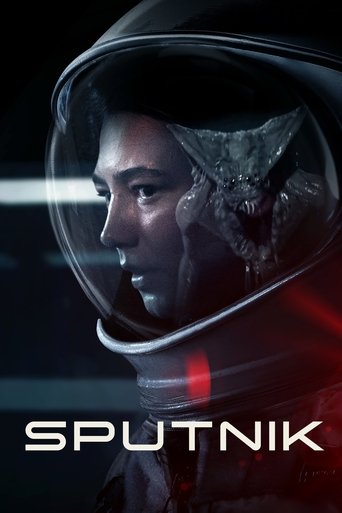
Sputnik (2020)

Picked by Felicia Oct 28, 2026
1h 53m Science Fiction, Drama, Horror Russian
Directed by Egor Abramenko

Based on director Egor Abramenko's 2017 proof-of-concept short film The Passenger

At the height of the Cold War, a Soviet spacecraft crash lands after a mission gone awry, leaving the commander as its only survivor. After a renowned Russian psychologist is brought in to evaluate the commander’s mental state, it becomes clear that something dangerous may have come back to Earth with him…

Behind the scenes

Most famous fact

A Russian Cold War take on the Alien formula: a 1983 Soviet cosmonaut comes back from space with a creature living inside him that crawls out of his mouth at night. Its snake-and-Komodo-dragon-inspired design was a deliberate attempt to avoid looking like the Xenomorph.

  1. A pandemic-disrupted releaseProduction

    Sputnik was due to premiere at the Tribeca Film Festival in April 2020, and Sony Pictures had planned a Russian cinema release for April 16. Covid-19 postponed Tribeca and closed cinemas, so the film went to Russian video-on-demand platforms on April 23. Variety reported that more than a million viewers had reportedly streamed it by August. IFC Midnight bought North American rights and released it in select theaters and on demand on August 14, 2020.

  • Director Egor Abramenko had mostly made commercials and music videos for about ten years before this, his first feature. He chose sci-fi horror on purpose, saying it is an unusual genre for the Russian film industry.

  • The film grew out of Abramenko's 2017 proof-of-concept short The Passenger, which introduced the idea of a Soviet cosmonaut coexisting with an alien creature. The short was meant from the start to lead to a full feature.

  • Per IMDb trivia, about 70% of the film was shot at the Shemyakin-Ovchinnikov Institute of Bio-organic Chemistry in Moscow, a brutalist Soviet building from 1959. Abramenko says the team found it by chance and called it 'like finding a treasure'.

  • Inverse reports that the institute interiors were shot in the winter of 2018–2019. Abramenko said the location itself shaped the film's visual style.

  • The creature's design grew from a pre-production idea about snakes living inside a body and leaving it at night through the mouth. Komodo dragon movement became a major visual reference. Abramenko called the design process long and painful, because the team knew the Xenomorph and the Predator already existed.

  • Abramenko wanted to combine practical effects with CGI. He says Russia has no practical creature-design department, so the alien was made entirely in CGI, with Main Road Post as the effects studio.

  • The team consulted scientists, doctors and psychologists on the setting and plot. Abramenko says they deliberately made the protagonist an outsider rather than a military person or cosmonaut.

  • IMDb trivia notes that during the metronome scene, one of the observation-room computers makes the sound effect used for the Nostromo's computer in Alien (1979). This is a user-submitted trivia item.

  • Abramenko says he grew up on Alien and The Thing. He also cites Jurassic Park, E.T. and James Cameron's films as inspirations, and Variety's review notes Tarkovsky's Solaris as another influence.

Avg 3.8

  • Felicia Felicia Oct 29, 2026

    Really special flick. This should’ve been huge, but seems like Covid fucked its wider release. Space horror set in Soviet Russia, a truly unique creature that looks spectacular and doesn’t suffer from being shown too much. This movie is kind of like what if Venom was extremely good actually. Every actor is crushing it. An indie gem that feels so much bigger

    Read it on Letterboxd
  • Jesse Jesse Oct 28, 2026

    Great little horror flick but it's a little slow in places. The creature is full CGI but convincing and different enough from other famous franchises that it feels original. The film's initial release was during COVID-19 lockdown apparently, so it was kind of dead on arrival. Check it out if you're into panning for gold.

    Read it on Letterboxd
  • Casey Casey Oct 30, 2026

    Love space love alien

    Read it on Letterboxd

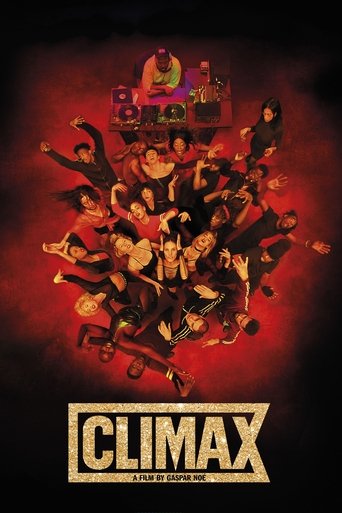
Climax (2018)

1h 37m Drama, Horror, Music French
Directed by Gaspar Noé
Written by Gaspar Noé

When a dance troupe is lured to an empty school, a bowl of drug-laced sangria causes their jubilant rehearsal to descend into a dark and explosive nightmare as they try to survive the night—and find who's responsible—before it's too late.

Art Cinema Award (CICAE), Cannes Directors' Fortnight 2018

Behind the scenes

Most famous fact

Noé shot it in just 15 days, in chronological order, with only a roughly five-page treatment and no script. Almost all the dialogue was improvised by a cast of real dancers, and the film includes a single take of more than 40 minutes.

  1. A film with no scriptProduction

    Noé worked from a treatment of about five pages with no dialogue, so the dancers improvised nearly everything apart from the choreography. He shot in chronological order. Boutella, who usually over-prepares, said she only understood her character and the film once shooting had wrapped. Noé also said chronological shooting gave him an out: if a dancer was injured or quit, the character could simply 'disappear'.

  2. How Boutella was recruitedCasting

    Noé approached Boutella through Instagram. They met in Paris, where he told her he wanted to make a film about dancers spiked with LSD. When she asked what else, or which role she would play, he said he didn't know. She signed on anyway because she admired his earlier films.

  3. The day-two booze mistakeLegend

    Noé has said that on about the second day of shooting he gave the tired dancers alcohol to wake them up, and called it a mistake. After that he switched to coffee and music breaks to re-energise them, which let them shoot for two more hours at a stretch.

  4. 'Based on real events' — or notControversy

    An opening text says the film is based on real events in France in winter 1996. Noé has described it as extrapolated from a story about a 1990s dance troupe that was collectively dosed from a spiked punchbowl and survived the night. Critics note there is no evidence for the story beyond the director's word.

  • Noé had the idea around the end of December. He cast and prepared the film in about four weeks, shot it in February, and premiered it at Cannes in May. Vice Studios co-produced.

  • Almost the entire cast are dancers (voguers, krumpers and others) with no acting experience. Boutella is the only professional actress, and Souheila Yacoub is the other cast member with prior acting experience. Noé said he cast mainly for dancing skill, flying in one dancer from Congo and one from the USA.

  • The ten-minute opening dance is one continuous shot. Because the dancers hadn't rehearsed it, it took between 15 and 16 takes. Noé says the first 8 or 9 were useless, and the group watched playbacks together to improve.

  • The choreographer, Nina McNeely, was recommended by Boutella. She reportedly arrived the Wednesday before shooting and rehearsed with 15 of the 21 dancers on Thursday and Friday. Noé was so impressed that he kept her on for the whole shoot, coaching the cast in movement, including butoh, and in how their behaviour should change once they were high.

  • Boutella said each day began with about four hours of rehearsal, followed by roughly 13 to 17 takes of shots that ran 8 to 10 minutes. Noé operated the camera on his shoulder.

  • Noé secured the music rights before shooting. Once the dancers have been filmed to a particular track, it is very hard to replace in post, because the choreography is synced to it. He wanted tracks such as Daft Punk's "Rollin' & Scratchin'" and Aphex Twin's "Windowlicker" and described the clearances as one of the hardest parts of the film. The soundtrack also includes Gary Numan and Soft Cell.

  • The stack of VHS tapes beside the TV that plays the dancers' audition interviews is a set of Noé's influences. Titles reported by critics include Suspiria, Salò, Possession, Querelle and Eraserhead, alongside books by authors such as Nietzsche.

  • Noé cited 1970s disaster and horror films as inspiration, including The Towering Inferno, The Poseidon Adventure and Cronenberg's Shivers. He likened the story to the Tower of Babel: people build something together, then it collapses.

  • The dancers were told they couldn't reference anything modern like smartphones, since the story is set in the 1990s. Noé says he told them to think of it as 1995, though the film's text places it in 1996.

  • The abandoned school setting, with its red- and green-lit corridors, has been compared by critics to the ballet academy in Argento's Suspiria. Noé says it was shot in an abandoned school in a Paris suburb.

Avg 2.8

  • Felicia Felicia Oct 28, 2026

    This is a movie that a man on a tinder date would tell me is his all time fave, and I’d squint at him for the rest of the evening  Avant Garde, arthouse, French, none of this bodes well for me specifically. I get that this just isn’t my bag. But I feel like nobody needed such prolonged scenes of shallow, pedantic conversation, some of which largely centered around sexual violence towards women. The first 40 minutes of this film are an absolute slog. I could not have cared less about any single character, and there were about 30 to choose from. When the action starts, the film picks up a bit, but I’m still not sure I needed to see a movie about a bunch of already shitty people getting even worse when they’re drugged.

    Read it on Letterboxd
  • Jesse Jesse Oct 28, 2026

    There was no script for the film, so all of the dialogue was improvised, and I think I would have liked this better if there was no words at all. I'd take 90 minutes of pretty people dancing to French EDM while reality deconstructs itself around them. Any time there was a conversation, it kind of just dampened the spectacle.

    Read it on Letterboxd

Forbidden Fruits (2026)

Picked by Beff Oct 26, 2026
1h 43m Horror, Comedy

Based on Lily Houghton's 2019 stage play Of the Woman Came the Beginning of Sin, and Through Her We All Die

Free Eden employee Apple secretly runs a witchy femme cult in the basement of the mall store after hours with fellow fruits Cherry and Fig. When new hire Pumpkin challenges their performative sisterhood, the women are forced to face their own poisons or succumb to a bloody fate.

Behind the scenes

Most famous fact

"It's a witchy horror comedy in which a mall boutique's sales staff, all named after fruits, run a secret coven in the store's basement. It's been pitched as Mean Girls set in a Free People store, and it adapts an off-Broadway play."

  1. Same fountain as Mean GirlsLegend

    The production found a Toronto mall and built a fountain there for the climactic showdown. They later realised it was the same fountain where a key moment of Mean Girls was shot. The film itself has been widely described as Mean Girls with witches, so the coincidence fits.

  2. Shooting nights in a working mallProduction

    Because the mall had to stay open, the crew shot from about 9 p.m. to 9 a.m. most nights. Early-morning mall walkers showed up around 6 a.m. Lili Reinhart hid from them so no one would spoil her red hair. The main store set was a former Hollister, and the location is reported to be Toronto's Sherway Gardens.

  3. Scheduling Lola Tung and recasting FigCasting

    Lola Tung was tied up with The Summer I Turned Pretty but became free right before the shoot. Another actress had first been cast in the role Alexandra Shipp ended up playing, and Alloway now says she can't imagine anyone else in it.

  • The original play is set in New York (Union Square). Alloway asked playwright Lily Houghton about moving it to a mall in Dallas, her hometown, and the mall is based on a real Dallas mall that she declines to name. She says it was built in the 1960s.

  • Alloway and Houghton pitched the film to producers before any script existed. Diablo Cody and Mason Novick signed on after the Zoom pitch and told them to go write it, and the script took several years to develop.

  • The script was on the 2023 Black List of the most-liked unproduced screenplays.

  • Emma Chamberlain, who plays Pickle, made her feature acting debut in the film. She was best known as a YouTuber and red-carpet host.

  • Alloway has said the play's biggest plot event was someone stealing a pink thong. She and Houghton, who had both researched female serial killers and binged true-crime podcasts, raised the stakes a lot for the film, adding gore and kills.

  • In the climax Lili Reinhart wears a T-shirt printed with the title of Houghton's play. This is according to the Cinemorgue wiki's trivia.

  • Early producers questioned whether it should be a story about women supporting each other. Alloway says that early pushback shaped the script, which examines the fake sisterhood between the women, and she describes it as trying to grow a garden in the cement block of the American mall.

  • Alloway has said cinematographer Karim Hussain, known for Possessor and Infinity Pool, was chosen because she knew he could make a mall look striking.

  • Alloway says she was inspired by the Abercrombie & Fitch stores she walked past as a child when imagining the Free Eden store.

  • The film opened at 1,525 US theaters to about $1.17M and finished near $2.3M domestically. It holds 76% on Rotten Tomatoes but 56 on Metacritic.

Avg 2.8

  • Felicia Felicia Oct 27, 2026

    I’ve never been conceptually drawn to mean girl horror. I guess you’re just supposed to wait for the biggest bitch to get their comeuppance. But they never really do. Not in any kind of satisfying way. Instead you just get to wince at all the Gen Z references written by someone who can’t quite decide if they’re making fun of it or not. I had a very boomerang experience with this one. It started painful, progressively found its identity, veered hard into horror in the last 15 minutes (with some genuinely fun kills), and then tanked with a wildly unnecessary after-credits scene.  It wanted to be Jawbreaker meets The Craft with a Jennifer’s Body villain, but it never really left Mean Girls territory. The performances are killer, but the story fell flat.

    Read it on Letterboxd
  • Jesse Jesse Oct 26, 2026

    A mash-up of The Craft and Mean Girls that can’t decide which lane it’s in, written with a Gen-Z Duolingo pack as its only thesaurus. The characters are all fun and memorable but the witchy stuff feels shoehorned in.

    Read it on Letterboxd
  • Casey Casey Oct 27, 2026

    Messy but fun

    Read it on Letterboxd

Mārama (2026)

Picked by Casey Oct 25, 2026
1h 29m Horror, Drama, Mystery

1859. When a young Māori woman is summoned from New Zealand to North Yorkshire, she uncovers her horrific colonial heritage and is compelled to confront and destroy the titled Englishman who devastated her family.

Best Feature Film, Abertoir Horror Festival 2025

  • Top prize, Seattle International Film Festival 2026
  • Best Actress (Ariāna Osborne), CineFantasy International Fantastic Film Festival 2026

Behind the scenes

Most famous fact

Mārama is pitched as the first "Māori Gothic" horror film: a revenge story in which a Māori woman travels to Victorian England and finds a lord's collection of stolen Māori artefacts and preserved heads. It held a rare 100% Rotten Tomatoes score.

  • Stappard says the film began with one image, a Victorian gentleman posed in front of a wall of 29 preserved Māori heads. He thought he was writing a drama, but it turned into a horror.

  • The film grew out of the story of Stappard's great-grandmother Rangiriri, born in 1880 to a Māori mother and a British father. She wore a moko kauae (chin tattoo) and led a troupe of young Māori women who toured New Zealand, Australia, America and England, probably in the 1910s. He carries her photo on his business card.

  • It took about seven years to make. During development Stappard sought advice from Māori women screenwriters, story editors and authors, and from a matakite (Māori seer).

  • Stappard says the image of a Māori house in the garden of an English Gothic mansion came from Hinemihi, a real Māori meeting house standing in an English garden just outside London.

  • Earlier drafts had more of a budding love story between Mārama and another colonised character. Māori advisors warned that it could read as a clunky male gaze, so Stappard reshaped it into a sisterly, supportive bond. He still sees the two as a couple in the closing scene.

  • The shoot lasted about 24 days. Ariāna Osborne played the lead for roughly 95% of her filming and appeared as a second character, Amelia, for only two days.

  • The party sequence was a two-day shoot that Stappard has called the most nerve-wracking of the production.

  • Stappard says audiences at festival screenings in Spain cheered after the haka. The room fell silent when the film's violence began.

  • Stappard calls it the first of a planned trilogy of Māori gothic horror stories about colonising violence meeting Indigenous retribution.

  • New Zealand submitted it for the 2027 Oscars' Best International Feature category. It was also the first co-release between sister companies Dark Sky Films and Watermelon Pictures, both owned by MPI Media Group.

Avg 3.5

  • Felicia Felicia Oct 26, 2026

    I love Darksky Films as a production studio because they give a voice to indie filmmakers and really celebrate their art. This film is no different.  Really rough watch at points. Dark and deeply upsetting. But also I have a really hard time accepting Toby Stephens as a villain because he’s fucking delightful

    Read it on Letterboxd
  • Jesse Jesse Oct 25, 2026

    It felt a little slow and I was confused about the story throughout most of its 89 minute run time, but the film was elevated by its setting, cinematography, score, and cast. All were great.

    Read it on Letterboxd

Sunset Boulevard (1950)

Picked by Jesse Oct 23, 2026
1h 50m Drama
Directed by Billy Wilder

A hack screenwriter writes a screenplay for a former silent film star who has faded into Hollywood obscurity.

Won 3 Oscars from 11 nominations, Best Picture among them

  • Golden Globe for Best Motion Picture – Drama
  • National Board of Review: Best Film

Behind the scenes

Most famous fact

Gloria Swanson's Norma Desmond descends her staircase and says "All right, Mr. DeMille, I'm ready for my close-up." AFI ranks the line #7 among movie quotes, and it is often misquoted as "I'm ready for my close-up, Mr. DeMille." The film also casts real silent-era figures (Buster Keaton, Cecil B. DeMille, Hedda Hopper, Erich von Stroheim) in parts that echo their own fading fame.

  1. Who would play Norma Desmond?Casting

    Casting the faded silent star was a long search. Mae West turned it down because she didn't want to play a fading star, and reportedly wanted to rewrite the dialogue. Mary Pickford feared it would damage her image and wanted to own the negative. Pola Negri's accent was too hard to follow on the phone, and Norma Shearer declined. George Cukor is said to have suggested Gloria Swanson, who had to be coaxed into a screen test.

  2. Montgomery Clift walks out two weeks before shootingCasting

    Clift was signed to play Joe Gillis but withdrew just before filming. He said the part was too close to his kept-man role in The Heiress. Wilder was furious and said an actor of any quality could convincingly make love to any woman. Some accounts suggest the real reason was his affair with an older singer, Libby Holman, who feared the film would mock their relationship. William Holden, then in a career slump, took the part for less money.

  3. The morgue opening that audiences laughed off the screenProduction

    The original cut opened in a city morgue, where Joe's corpse told his story to the other dead bodies. At a preview in Evanston, Illinois, the audience laughed at the first fifteen minutes. Wilder cut the scene, and Paramount shelved the film for about six months. A new opening of police cars arriving at the mansion, with Joe narrating from the pool, tested much better.

  4. The end of Wilder and BrackettFeud

    Brackett found the scene of Norma's beauty treatments cruel in its emphasis on what age had done to her, but Wilder insisted it was essential. Wilder won, and privately told friends he would not make more films with Brackett. Sunset Boulevard was their last collaboration, ending one of Hollywood's longest writing partnerships.

  • Wilder began shooting on March 26, 1949 with only 61 pages of the script done, so he shot more or less in story order. That was new for Swanson, and it helped her build Norma's slide into madness.

  • Swanson had given up on movies and was working in New York radio and TV when the offer came. She contributed to the script and look of Norma, including her Charlie Chaplin impression, the photos around the house, and a white peacock feather on a hat that nods to her DeMille film Male and Female.

  • Per her daughter, Swanson stayed in character at home throughout the shoot. On the last day she announced that only three people now lived in the house, meaning that Norma Desmond had left.

  • Erich von Stroheim suggested using clips from Queen Kelly (1929) as the film Norma screens. That was his own unfinished last major directorial effort, a Swanson vehicle produced by her lover Joseph Kennedy. Max the butler, a former great director, was clearly modelled on von Stroheim himself.

  • Early drafts of the script were titled "A Can of Beans" to keep studio censors from noticing the project. Wilder and Brackett also marked the first act "top secret." Brackett has said they first imagined Mae West and Marlon Brando in the leads, though neither was ever offered the part.

  • Darryl Zanuck, Olivia de Havilland, Tyrone Power and Samuel Goldwyn all refused to let their names be used in the film, but Wilder used Zanuck's and Power's anyway. Greta Garbo did allow her name to be used, then reportedly regretted it because she felt it was used in a past-tense way.

  • Besides Keaton, DeMille and Hopper, the cameos include silent star Anna Q. Nilsson and H.B. Warner. Paramount songwriters Jay Livingston and Ray Evans play the piano at the New Year's Eve party, singing a parody of their Oscar-winning "Buttons and Bows." Hopper and Keaton both died on February 1, 1966.

  • Wilder first asked silent star William Haines to play one of Norma's bridge partners. Haines had left acting after refusing to hide that he was gay, and he was too happy as an interior decorator to revisit his past.

  • Norma's mansion scenes were shot on Wilshire Boulevard, not on Sunset. The house belonged to the second Mrs. J. Paul Getty, and it has since been demolished. For the shot of Joe's body floating in the pool, the camera looked up at a mirror on the pool bottom, so it never had to go underwater.

  • Paramount didn't disguise itself in the film. Buzz was so strong that watching the dailies became one of the hottest tickets on the lot. Holden took the role for $39,000, well below the $60,000 offered to Clift.

  • Jesse Jesse Oct 23, 2026

    I loved the Norma Desmond character and her insane facial expressions. I have a feeling there were a ton of early Hollywood inside baseball references that I completely missed, but it's still a great film.

    Read it on Letterboxd

Wendigo (2002)

Picked by Felicia Oct 22, 2026
1h 32m Horror, Drama, Thriller
Directed by Larry Fessenden

A family from the city decide to spend a weekend away at a friend's country farmhouse. But a fluke accident sets off a chain of events that alters their lives forever and conjures up the ferocious spirit of the Wendigo.

Best Film, Woodstock Film Festival 2001

Behind the scenes

Most famous fact

Larry Fessenden's art-house horror film treats the Wendigo legend as something a young boy takes to heart while his family unravels. It premiered at Slamdance in 2001 and closes his thematically linked trilogy of revisionist horror films with Habit and No Telling.

  • Wendigo is the third of Fessenden's 'revisionist horror' films, after Habit (vampires) and No Telling (Frankenstein). Wendigo does the same for a creature of folklore.

  • The film was shot on Super 16mm and premiered at the Slamdance festival in January 2001. It reached US DVD through Artisan Entertainment in December 2002 and was re-released by Cinema Club in June 2003.

  • Filmmaker magazine described the creature work as German Expressionist-influenced puppet effects. That approach differs from the usual monster-suit horror.

  • The 4K/Blu-ray release from Vinegar Syndrome includes an alternate ending for the film. It also has a sales trailer for a proposed animated Wendigo TV series, introduced by Fessenden.

  • The disc extras include an archival commentary track with Patricia Clarkson, Jake Weber and John Speredakos, plus a 32-minute making-of documentary called 'Searching for the Wendigo'.

  • Fessenden edited the film himself as well as writing and directing it. Jeffrey Levy-Hinte produced and Michelle DiBucci composed the score.

  • Despite its title, some viewers note that the legend is only a story the boy hears and takes to heart, not the film's real subject. Reviewers read the film as a child coming to terms with adult cruelty.

  • The film was shot in the Catskills area of Ulster County, New York. Locations include Phoenicia, Olive and Kingston.

  • Jesse Jesse Oct 22, 2026

    Not a fan of this one. There were a lot of unintentionally funny shots that made it at least a little entertaining though.

    Read it on Letterboxd